TIMELINE B · FICTION · science
Tesla and SpaceX Merge Into One Company Nobody Can Legally Pronounce
The 4.2% shot lands: a single filing folds cars and rockets into one entity, and the paperwork ran out of room for the combined name.
Our universe · August 2, 2026
The market priced this at 4.2% (1-in-24). It resolves September 30, 2026.
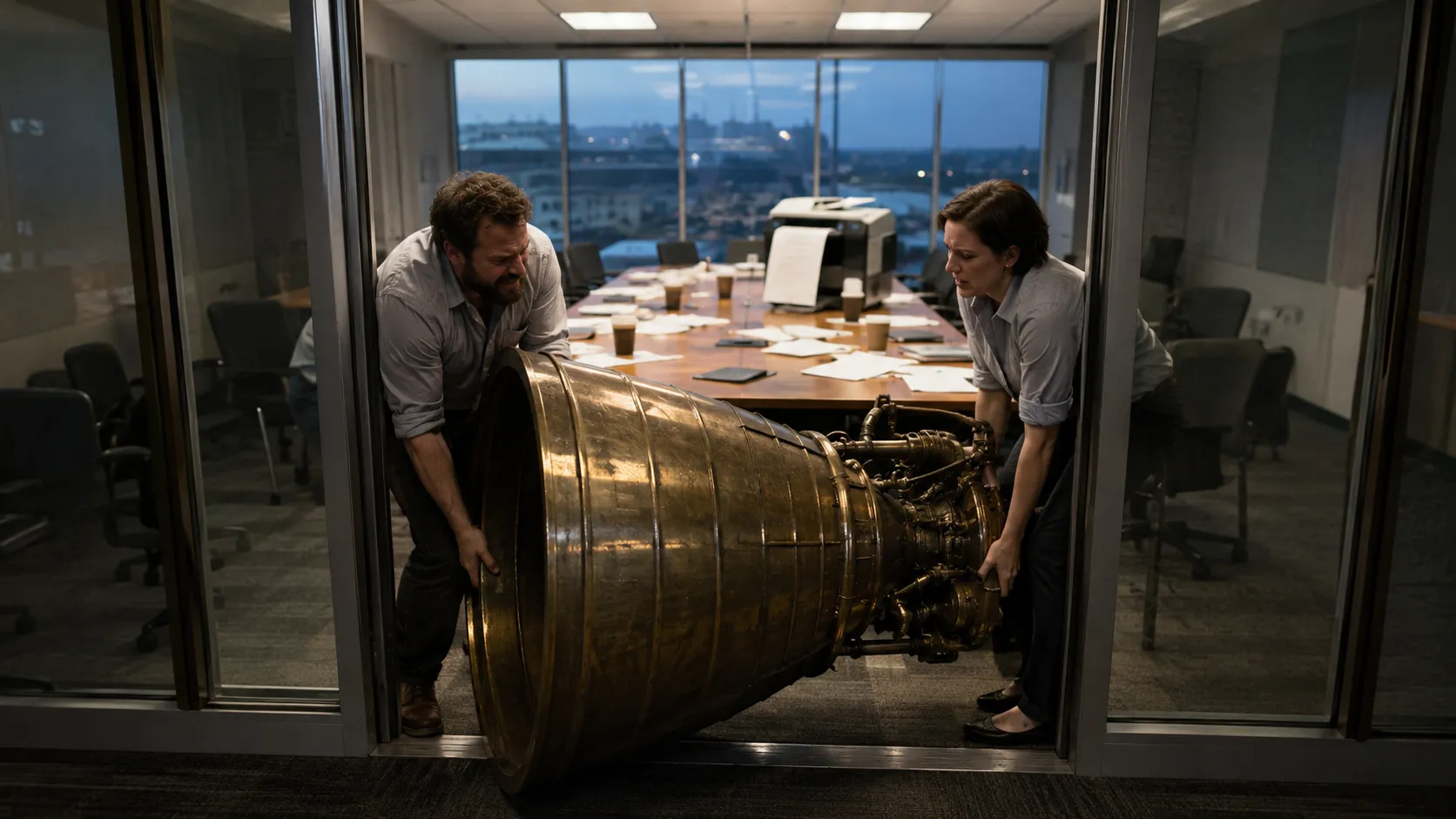
The merger closed at 6:14 a.m., filed under a placeholder name because the joint entity's legal name exceeded the form's character limit. Twelve lawyers watched a printer jam. One rocket, one sedan, one balance sheet.
Meridian Macro Institute chief economist Dr. Casimir Blum called it "the only deal where the synergy memo cites both crumple zones and orbital re-entry heat shields." The mechanism is dull and real. Both firms shared a supplier for the same aluminum-lithium alloy, and a single procurement contract, signed to save $340 million a year, tripped a change-of-control clause that made merging cheaper than staying apart.
The scene at the closing table was chaos. Someone had brought a rocket-engine bell as a centerpiece. It did not fit through the conference room door.
The Bureau of Scheduling Frictions logged the announcement 41 minutes ahead of a separate market on the subject's weekly posting volume, which resolved Yes at 180 to 199. He posted 47 times about the merger before the ink dried.
New institution Halcyon Compute, briefly listed as an acquirer, denied involvement and asked to be removed from three group chats. Shares of the combined entity have no ticker yet. The placeholder ticker is nine question marks.
— Timeline B. In our universe, the odds of this were 4.2%.